
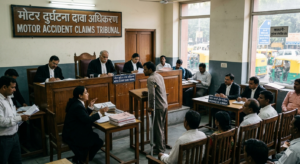
The Motor Accident Claims Tribunal (MACT) was established under the Motor Vehicles Act, 1988, specifically to adjudicate claims for compensation arising from motor vehicle accidents. Unlike typical civil cases, MACT is designed to provide a more streamlined, summary procedure for victims of road accidents.
1. Types of Claims
There are two primary categories of claims handled in this context:
Third-Party Claims: Mandated by law, every vehicle must have third-party insurance. This covers liability for death, bodily injury, or damage to property belonging to someone else.
Own Damage Claims: If you have a comprehensive policy, you can claim for damages to your own vehicle. These are typically settled directly with the insurer unless a dispute arises.
2. Who Can File a Claim?
Under Section 165 of the Act, a claim petition can be filed by:
The injured person.
The legal heirs of the deceased (in case of a fatal accident).
The owner of the property (if the accident resulted in property damage).
An authorized agent of the victim or their legal heirs.
3. Essential Documentation
To build a strong case in the Tribunal, the following documents are usually required:
Police Documents: Copy of the FIR, Charge Sheet, and Site Map.
Medical Records: Medico-Legal Case (MLC) report, original medical bills, discharge summary, and disability certificates (if applicable).
Identity & Income Proof: Aadhar card, salary slips, ITR, or employment certificates to calculate the “loss of income.”
Vehicle Documents: Registration Certificate (RC), Driving License (DL) of the driver, and the Insurance Policy.
4. Compensation Structure
The Tribunal calculates compensation based on “just” and “reasonable” standards, often divided into two heads:
| Pecuniary Damages (Special) | Non-Pecuniary Damages (General) |
| Loss of Earning Capacity: Calculated using the Multiplier Method (Age vs. Income). | Pain and Suffering: Mental and physical agony. |
| Medical Expenses: All costs related to treatment and rehabilitation. | Loss of Amenities: Compensation for loss of enjoyment of life. |
| Incidental Charges: Special diet, travel, and attendant charges. | Loss of Consortium: Compensation for the loss of a spouse or family relationship. |
5. Procedural Steps
Filing: The petition is filed in the MACT where the accident occurred, where the claimant resides, or where the defendant lives.
Notice: The Tribunal issues notice to the owner, driver, and the insurance company.
Evidence Stage: Both sides present evidence, witnesses (like doctors or eyewitnesses), and cross-examine each other.
Award: The Tribunal passes an “Award” (judgment). If the insurer is liable, they must deposit the amount within 30 days.
Appeal: If any party is dissatisfied, an appeal can be filed in the High Court within 90 days of the award.