
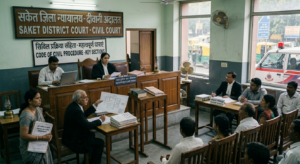
Civil suits are legal disputes between individuals, organizations, or government entities, typically centered around private rights and obligations. Unlike criminal cases, the objective is not to punish an offender with jail time, but to provide “remedy” or “relief” to the aggrieved party (the plaintiff) through compensation, specific performance, or injunctions.
- Common Types of Civil Suits
Civil law is vast, covering almost every non-criminal interaction:
- Property Disputes: Suits for possession, partition of ancestral property, or disputes regarding “permissive possession.”
- Contractual Disputes: Breach of contract, recovery of money, or specific performance of an agreement.
- Family Law: Divorce, child custody, maintenance execution, and succession/inheritance matters.
- Tort Claims: Suits for damages arising from negligence, defamation, or nuisance.
- Matrimonial/Personal Law: Matters under the Hindu Marriage Act, Special Marriage Act, or the Domestic Violence (DV) Act (which often carries a civil-quasi-criminal nature).
- The Civil Procedure (Step-by-Step)
In India, these cases are primarily governed by the Code of Civil Procedure (CPC), 1908.
Stage | Description |
Plaint Filing | The Plaintiff files a “Plaint” outlining the facts, the cause of action, and the specific relief sought from the court. |
Summons | The court issues a formal notice (Summons) to the Defendant, requiring them to appear and answer the claim. |
Written Statement | The Defendant files their response, admitting or denying the allegations. They may also file a “Counter-claim.” |
Replication | The Plaintiff may file a reply to the Defendant’s written statement to clarify new facts. |
Framing of Issues | The Judge identifies the specific points of conflict (Issues) that must be decided to resolve the suit. |
Evidence | Both parties produce documents and witnesses. Witnesses are subjected to Examination-in-Chief and Cross-Examination. |
Final Arguments | Lawyers for both sides present their final legal interpretations based on the evidence recorded. |
Judgment & Decree | The court delivers the Judgment, followed by a formal Decree which is the executable part of the order. |
- Key Remedies in Civil Suits
The court can grant several types of relief:
- Damages/Compensation: A monetary award to make up for a loss.
- Specific Performance: Ordering a party to fulfill their specific duty under a contract (e.g., selling a specific piece of land).
- Injunctions: A court order requiring a person to do (Mandatory) or refrain from doing (Prohibitory) a specific act.
- Declaratory Decree: A formal declaration of a person’s legal status or right to property.
- Execution Proceedings
Winning a case is only half the battle. If the losing party does not comply with the decree, the winner must file an Execution Petition. This can involve:
- Attachment of Property: Seizing assets to satisfy a debt.
- Arrest and Detention: In specific cases (like willful default in maintenance or money decrees), the court may issue arrest warrants to enforce compliance.
- Delivery of Possession: Physically handing over property to the rightful owner.